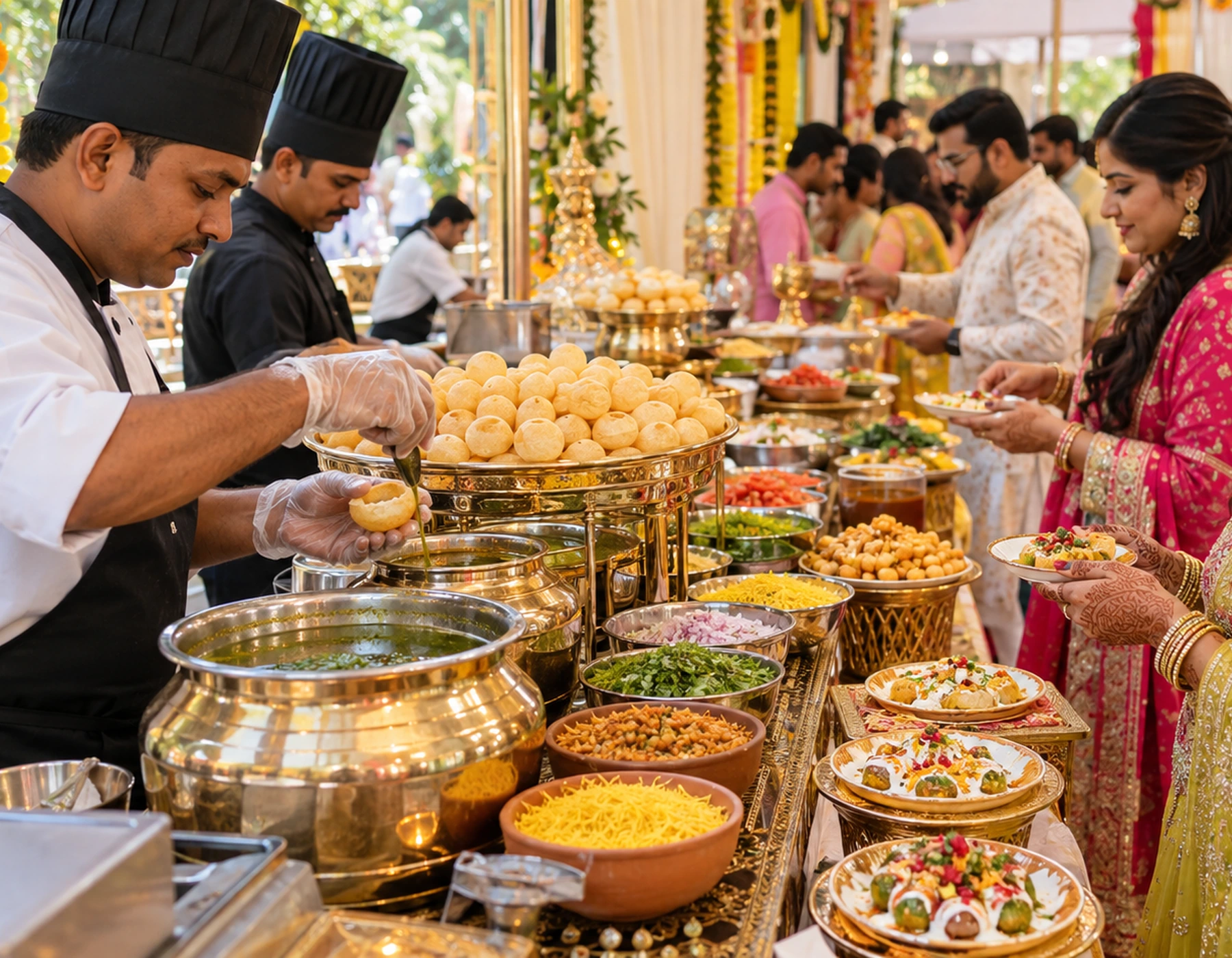
This section is written specifically for Mehendi Catering. It uses a different set of operational checkpoints, venue questions and guest-service priorities so the page is not a copy of another catering or locality page. The final choices still depend on the confirmed venue, guest count, menu and event schedule.
1. Second-Batch Release for Mehendi Catering
A distinctive planning angle for mehendi catering is the relationship between second-batch release, school-campus gate timing and lost-and-found point. These details may look operational, but they directly influence guest comfort and food quality. Confirming them early makes the service plan more specific to this page rather than a generic catering checklist.
2. Ladle And Utensil Allocation for Mehendi Catering
During the final review for mehendi catering, ask whether ladle and utensil allocation is realistic at the selected venue. Then confirm how photography schedule buffer will be handled and who will monitor bride-and-groom meal reserve. Recording these answers gives the catering crew a usable service map and helps the host understand why certain menu or counter choices are recommended.
3. Backstage Artist Meal Timing for Mehendi Catering
A useful micro-plan for mehendi catering starts with backstage artist meal timing, moves to sweet syrup consistency, and closes with dessert release timing. Each point should have an owner and a confirmation time. This is especially valuable when several family members, venue staff or outside vendors are involved, because responsibility is clear before service begins.
4. Staff Briefing Notes for Mehendi Catering
For this mehendi catering requirement, the host discussion should include staff briefing notes. Once that is clear, the team can plan extension-cable routing and verify hospital shift meal window. The three decisions work together: one affects preparation, one affects service pace, and one acts as a safeguard when the venue has a restriction or delay.
5. Raw-Water Source Check for Mehendi Catering
A distinctive planning angle for mehendi catering is the relationship between raw-water source check, arrival-wave planning and covered-food movement. These details may look operational, but they directly influence guest comfort and food quality. Confirming them early makes the service plan more specific to this page rather than a generic catering checklist.
6. Coffee Decoction Reserve for Mehendi Catering
For mehendi catering, coffee decoction reserve should be decided before night-lighting around counters. Linking those two details helps the team protect parcel sealing check without creating a last-minute workaround. The host can record the choice in the final event sheet so kitchen, transport and service staff work from the same instruction.
7. Unused-Food Documentation for Mehendi Catering
The final operating note for mehendi catering should not stop at menu names. It should also capture unused-food documentation, explain the approach to post-service clearing route, and specify how spice-level calibration will be checked. These details are deliberately page-specific so the plan reflects the event type or locality instead of repeating the same advice everywhere.
8. Return-Vessel Count for Mehendi Catering
A distinctive planning angle for mehendi catering is the relationship between return-vessel count, home kitchen sharing plan and wheelchair dining access. These details may look operational, but they directly influence guest comfort and food quality. Confirming them early makes the service plan more specific to this page rather than a generic catering checklist.
9. Hand-Wash Access for Mehendi Catering
A venue walk-through for mehendi catering becomes more useful when it checks hand-wash access, dessert cold-storage check and senior-citizen service lane instead of only measuring the dining area. Those details connect the back-of-house plan with the guest-facing experience. Any constraint found here can be solved before the event rather than during the busiest service period.
10. Retail Peak-Hour Refill for Mehendi Catering
The event sheet for mehendi catering can use retail peak-hour refill as one checkpoint, fried-item batch release as the next, and cold-item holding as the final verification. That combination is useful because it connects menu production with the way guests actually move through the venue. It also creates a page-specific basis for staffing and equipment choices.
11. Non-Vegetarian Separation for Mehendi Catering
During the final review for mehendi catering, ask whether non-vegetarian separation is realistic at the selected venue. Then confirm how emergency rain cover will be handled and who will monitor speech timing buffer. Recording these answers gives the catering crew a usable service map and helps the host understand why certain menu or counter choices are recommended.
12. Serving-Spoon Reserve for Mehendi Catering
When the brief for mehendi catering reaches the venue-planning stage, review serving-spoon reserve first, then test it against damage check before exit. The final decision should also account for waste segregation point. This sequence gives the service supervisor a practical order of work instead of a broad instruction that can be interpreted differently on event day.